
From February 2 to 5, 2026, led by Professor Wang Xiao, Assistant Dean of the International Institute of Finance (IIF), the IIF joined hands with the Guanghua School of Management, Peking University, to launch a four-day national conditions and social conditions research tour in Guangzhou and Shenzhen. Aimed at addressing core pain points in the carbon sector and exploring pathways for green finance development, the research tour targeted in-depth connections with local government agencies, carbon trading platforms and leading industrial enterprises, explored the practical implementation paths of the national "Dual Carbon" strategy in an all-round manner, and promoted the in-depth integration of research practice and academic research. It injected practical impetus into the IIF’s scientific research in green finance and carbon management, and contributed to the implementation of the national "Dual Carbon" strategy.
As a frontier for reform and opening-up, Guangdong Province became one of the first pilot provinces for carbon emission trading in China in 2011, with Shenzhen included in the pilot scheme simultaneously, forming a green development pattern of "provincial overall planning and dual-city leadership". Among them, Guangzhou, with its advantages as a South China economic and energy hub, boasts profound practical experience in carbon trading mechanisms and energy transition; as a special economic zone in the new era, Shenzhen has taken the lead in piloting practices in responding to overseas carbon rules and product carbon footprint management, creating a replicable "Shenzhen Model". This research focused on key topics including carbon cost transmission on the power side, product carbon footprint, corporate carbon accounting, green rights cancellation and response to overseas carbon rules, achieving full-dimensional coverage of "policy-market-enterprise-technology".
The research delegation’s first stop was Guangzhou, where they visited carbon trading platforms, provincial state-owned enterprises (SOEs) and technology enterprises to decode the logic of the carbon market and explore paths for industrial transformation and technological breakthroughs. At the start of the research, the team held a special meeting to systematically sort out core knowledge of carbon trading, clarify the differences between emission allowances and voluntary emission reduction trading, interpret the current situation of the European carbon market and core requirements for voluntary emission reductions, and consolidate the theoretical research foundation.
At the Guangzhou Carbon Emissions Exchange (GCX), the delegation held in-depth discussions with Director Xiao (in charge of strategic research and green finance) and Dr. Zhang on topics such as carbon trading mechanisms and responses to overseas carbon rules. They gained detailed insights into GCX’s operation model and innovative practices of promoting carbon inclusive development through the dual-wheel drive of "government functions + market-oriented services", with focused exchanges on key issues including carbon data accreditation, power grid factor promotion and responses to the EU’s Carbon Border Adjustment Mechanism (CBAM). The delegation learned that data from the ecological and environmental system is more likely to be recognized overseas, the construction of zero-carbon parks and direct green power supply are critical to improving carbon traceability capabilities, and mastered effective paths for coordinated policy and market responses to overseas carbon rules. It was recognized that the sound development of the carbon market requires balancing top-level design and grassroots implementation to build a solid market foundation for the implementation of the Dual Carbon strategy.
On the morning of February 3, at the Energy Conservation and Carbon Reduction Company of Guangdong Energy Group, the delegation gained on-site insights into the practical exploration of this provincial SOE in enabling full-scenario low-carbon transition by building a model of "multiple technical units + unified commercial interface" relying on its full-industry-chain advantages. The delegation clarified the responsibilities, commitments and strategic priorities of provincial SOEs in the Dual Carbon sector, and learned practical methods for collaborative carbon reduction across the entire industrial chain. It was deeply recognized that as the main force in the Dual Carbon transition, SOEs can give full play to their exemplary and leading role only by solving practical problems with market-oriented thinking.
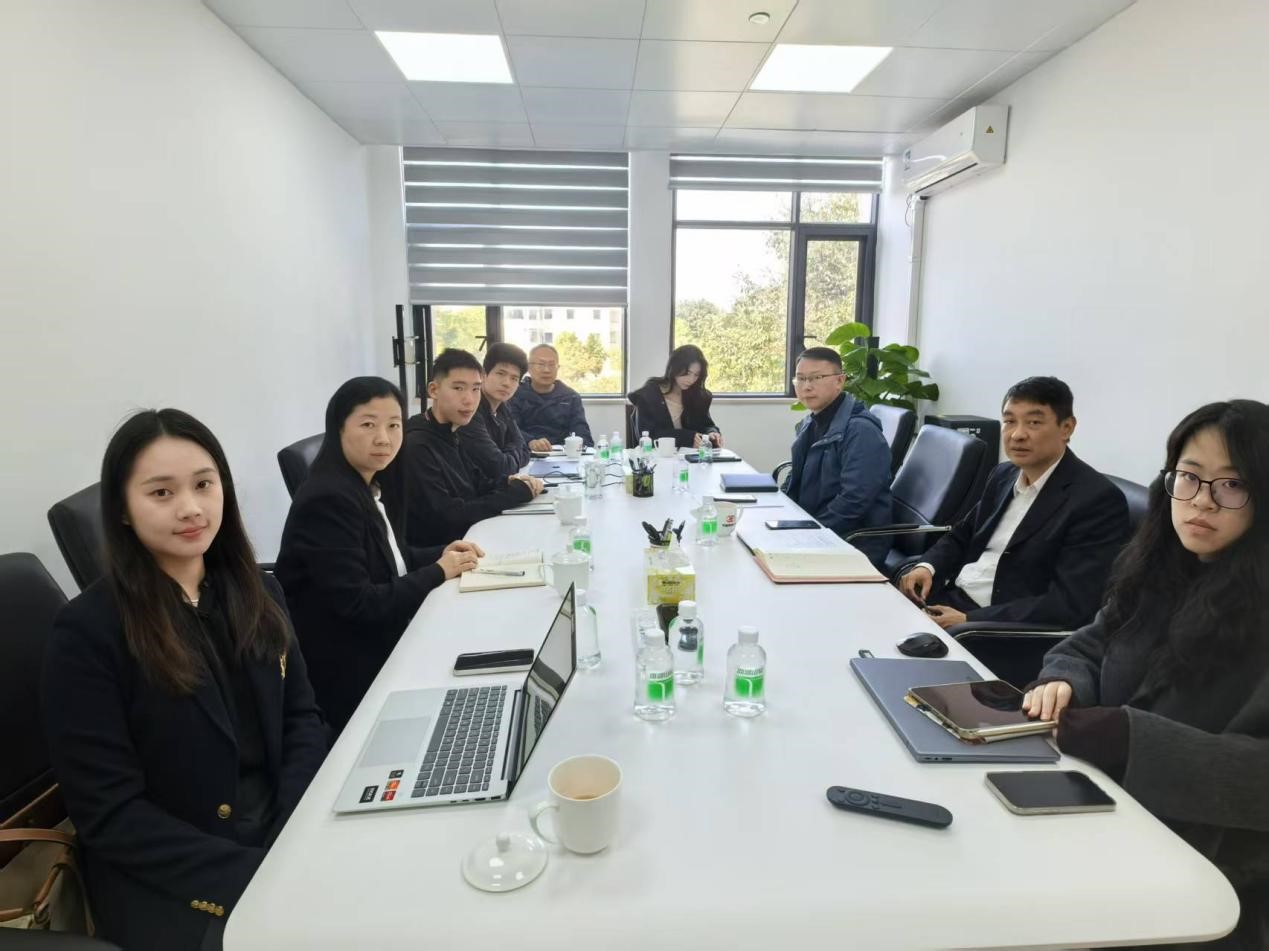
On the afternoon of February 3, at Guangdong Heyuan New Material Research Institute Co., Ltd., a "Little Giant" enterprise specializing in sophisticated technologies, the delegation witnessed the remarkable effects of hard-core technologies in breaking through low-carbon technical bottlenecks and mastered the development path of technology enterprises driving carbon reduction through R&D and innovation. The company focuses on R&D of liquid cooling and nano-metal materials with sufficient R&D investment and an academician workstation, masters independently controllable spray liquid cooling technology, reduces energy consumption by 30% compared with air cooling, and has accumulated carbon reduction of over 2,400 tons. The delegation fully recognized that technological empowerment and independent technological breakthroughs are the lasting driving forces for green development.
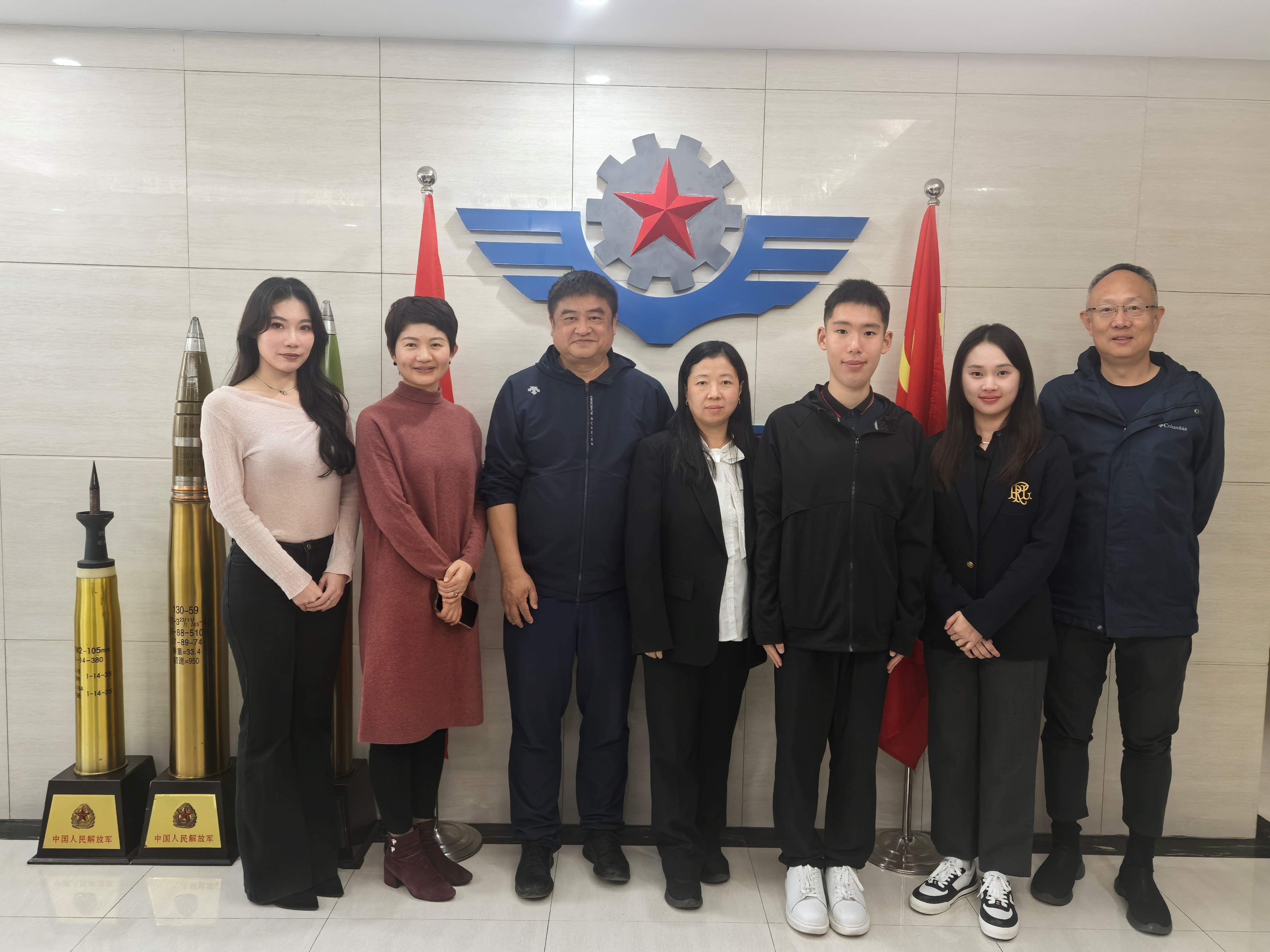
After concluding the research in Guangzhou, the delegation headed to Shenzhen, guided by innovation-driven development, to visit leading industrial enterprises and experience the vibrant green development of this innovation highland.
On February 4, at Huntkey Industrial Co., Ltd., a leading enterprise in the power supply industry, the delegation gained in-depth insights into the company’s global market layout under the "OEM + ODM + OBM" model, the practical path of low-carbon development through technological innovation such as the construction of photovoltaic power stations and improvement of energy conversion efficiency, as well as pain points such as difficulties in Scope 3 data statistics faced by the enterprise. It was deeply appreciated that the Dual Carbon transition of the manufacturing industry requires balancing technological innovation and cost control to embark on a sustainable development path.
On the morning of February 5, at the global headquarters of BYD, the leader in new energy vehicles, the delegation visited the full-chain carbon management practices of this enterprise. They gained detailed insights into BYD’s global layout targeting "full-value-chain carbon neutrality by 2045", including the independent development of the "i-Di Carbon Chain" platform, the release of China’s first life-cycle carbon footprint report for new energy vehicles, and the formulation of response strategies for the EU CBAM. It was clearly recognized that enterprises’ Dual Carbon transition needs to be based on the entire value chain and enhance green competitiveness through systematic construction to seize opportunities in international competition.
The four-day research tour in Guangzhou and Shenzhen was compact and fruitful. The delegation visited 5 key institutions successively, and gained a comprehensive grasp of the distinctive highlights of Dual Carbon practices and core pain points of enterprise development in the two cities. Guangzhou promotes the transformation and innovation of traditional industries relying on policy overall planning and energy advantages, while Shenzhen takes the lead in piloting practices in overseas compliance and carbon footprint management with its innovation vitality, forming a market-oriented and international green ecosystem. This research accurately captured the distinctive features of each institution: institutional innovation of GCX, SOE responsibility of the Energy Conservation and Carbon Reduction Company, technological breakthrough of Heyuan New Materials, green practice of Huntkey, and full-chain layout of BYD. A large amount of first-hand information was collected, providing a solid support for subsequent academic research. It is also a vivid embodiment of the IIF’s practice of the philosophy of "Party-building leadership, practice-based education, and scientific research serving the country", effectively improving the team’s practical ability and professional literacy.
In the future, the IIF will deepen the research outcomes, focus on key topics such as power carbon cost transmission and responses to overseas carbon rules, give play to its scientific research advantages, and promote the transformation of achievements into high-quality research reports and policy suggestions to boost the quality and efficiency of low-carbon development in Guangdong. Meanwhile, the institute will build a "scientific research + practice" platform, guide teachers and students to root themselves in reality, deeply engage in green finance and carbon management, promote the integration of academic innovation and real economy, lead students to practice their original aspirations with professional strength, and contribute wisdom and strength to the national Dual Carbon strategy.